
Marcus Valerius Corvus was a Roman commander and statesman of the fourth century BC, remembered for a duel with a Gallic warrior in which a raven supposedly came to his aid. The story explains his famous name, but his repeated commands and his reputation for handling soldiers with restraint make him worth following beyond that extraordinary afternoon.
Why was Marcus Valerius called Corvus?
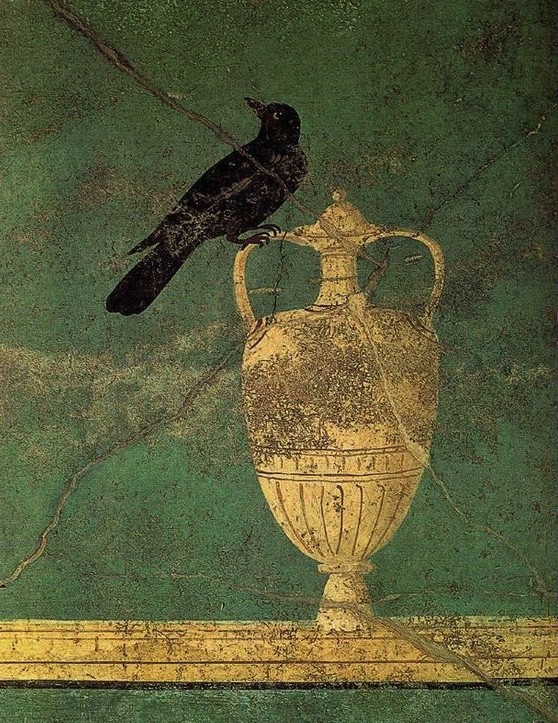
Livy places the encounter in 349 BC, when Marcus Valerius was serving as a military tribune. A Gallic champion challenged the Romans to single combat, and Valerius obtained his commander’s permission to meet him. As the two men fought, a bird settled on the Roman’s helmet and attacked his opponent’s face. Valerius killed the distracted Gaul, after which the encounter expanded into a battle between the armies. His new name, Corvus, meant raven or crow. [1]
The bird’s assistance is presented as divine favor, which tells us how Romans wanted the victory remembered. Livy was writing centuries after the supposed duel, however, and his narrative cannot establish that the encounter happened exactly as described. A family’s celebrated ancestor, a memorable name, and a story of divine protection could reinforce one another as the account passed through generations.
Readers need not choose between accepting every detail and dismissing the man himself. The raven belongs to the story of his reputation, while the offices and campaigns belong to the attempt to reconstruct his public career. Those are related questions, but they require different kinds of evidence.
A commander in Rome’s struggle for Italy
Corvus belongs to the period when Roman power was expanding through Italy, before the Republic had fought its great wars with Carthage. In Livy’s account, the popular enthusiasm surrounding the duel helped carry him into the consulship for the following year. His later military career took him into the fighting against the Samnites, whose strength made Rome’s advance into southern Italy a prolonged undertaking. [1]
Livy’s description of the campaign of 343 BC gives Corvus a distinctive way of commanding. He encourages his soldiers by appealing to the experience they share with him and by presenting himself as a man who participates in their work. The speeches are literary compositions transmitted by a much later historian, so they should not be read as transcripts from a Roman camp. They do show the qualities that the tradition attached to this particular commander. [2]
That picture complicates the familiar image of Roman discipline as nothing but obedience enforced by punishment. Authority could also be represented as something earned through familiarity, courage, and a soldier’s confidence that his commander understood what he was asking of him. Whether every incident is recoverable or not, the tradition made Corvus an example of that kind of leadership.
What does the mutiny story reveal?
The same theme appears in Livy’s account of the military disturbance of 342 BC. Corvus is appointed dictator and confronts men who have turned against the state, yet the encounter moves toward negotiation when the armies recognize their fellow citizens. His relationship with soldiers makes reconciliation possible in the story. [3]
Livy also reports competing versions of the disturbance, including disagreement over its leaders and the measures that followed. That admission deserves to remain beside the more polished narrative. The episode is evidence for how Romans remembered a dangerous conflict within their community, but its surviving details do not all fit together into an uncontested record.
How should we read his biography?
A useful reading separates three layers: the public career attributed to Corvus, the dramatic episodes used to explain his character, and the purposes of the authors who preserved them. A story may be valuable even where its literal accuracy cannot be demonstrated, because it shows what later Romans admired and what they feared.
Corvus therefore offers more than a picturesque beginning to a list of officeholders. His remembered career brings together military expansion, competition for public honor, and the problem of keeping armed citizens loyal to one another. Marco Valenti’s book follows those connections while asking how much of the man can be recovered from the sources that survive.
Read Marcus Valerius Corvus by Marco Valenti
The free 4-page PDF includes the title page and the introduction and its notes. These are selected pages from the book PDF, with their original typography and pagination retained; gaps in page numbers reflect the selection.
Sources and further reading
The guide above is a modern explanation of the evidence. The links below identify the ancient passages and, where indicated, modern commentary used in preparing it.