
Gaius Flaminius was the Roman politician and commander killed when Hannibal ambushed his army at Lake Trasimene in 217 BC. Before that disaster, his career included a controversial land distribution, a consulship against the Gauls, and the censorship associated with the Via Flaminia. Understanding him requires reading the defeat alongside the political judgments embedded in our sources.
Why was Flaminius controversial?
Flaminius promoted the distribution of conquered land to Roman citizens in 232 BC. The measure concerned territory formerly occupied by the Senones, and it connected domestic opportunity with Rome’s growing presence in northern Italy. To a Roman recipient, a land allotment could offer a livelihood; to neighboring peoples, the arrival of settlers could suggest that Roman ambitions would not stop at military supremacy. [1]
Polybius makes that second concern explicit, arguing that the policy helped convince the Gauls that Rome intended to expel them. He also condemns its effect on Roman popular politics. His account is valuable precisely because it preserves both the measure and a forceful judgment about it, but the judgment should not disappear into a supposedly neutral description of Flaminius.
Modern readers can recognize the conflict over land and political authority without assigning Flaminius to a modern political party. Roman citizenship, assemblies, aristocratic competition, and conquest created circumstances different from those of modern electoral politics. Describing the actual proposal is more illuminating than giving its author a familiar contemporary label.
The Via Flaminia and the career before Trasimene
Flaminius held his first consulship in 223 BC and fought the Insubrian Gauls. Polybius reports a Roman victory while criticizing the commander’s dispositions, crediting the soldiers and their officers with overcoming the danger. This is an early example of the interpretive problem that follows Flaminius: even success reaches us through an account determined to explain why he did not deserve much credit for it. [2]
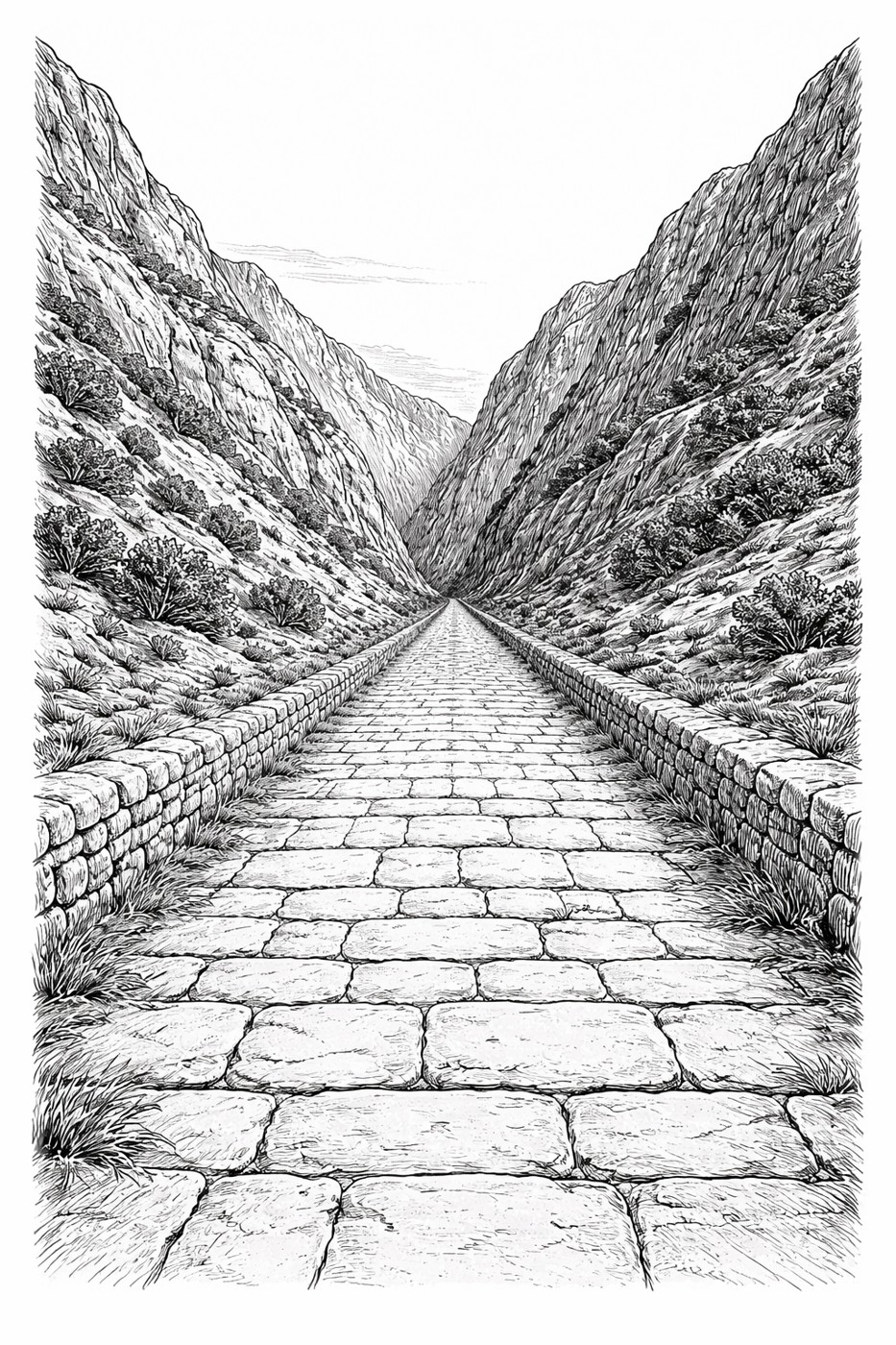
As censor in 220 BC, he was associated with the construction of the Via Flaminia, linking Rome with Ariminum on the Adriatic, and the Circus Flaminius in Rome. The road belongs in his biography because it connects the political and military career with a durable public work. A man remembered principally for a lost battle also helped shape how people moved through Roman Italy. [3]
What happened at Lake Trasimene?
In 217 BC Hannibal moved through Etruria, devastating the country and drawing the Romans after him. Polybius explains the pursuit partly through Flaminius’s anger and concern about how delay would look at Rome. That psychological explanation belongs to the historian’s reconstruction; the ambush itself can be followed through his description of the ground and the deployment of troops. [4]
Hannibal placed forces around the route beside the lake during the night. When the Roman column entered the enclosed ground in the morning mist, attacks came from several directions before the army could form an effective response. Men still arranged for marching faced enemies descending from the surrounding heights, and the poor visibility made it difficult for officers to understand what was happening elsewhere.
Flaminius died in the fighting, and much of his army was killed or captured. Some Roman troops broke through the force in front of them, only to discover afterward how completely the rest of the army had been defeated. Their temporary success makes the disaster more intelligible: individual groups could fight effectively while the army as a whole had lost the ability to act together. [4]
Was the ancient verdict fair?
The defeat gives us strong grounds to examine Flaminius’s decisions, but it does not turn every hostile comment about his earlier life into an established fact. Polybius presents a general lesson about understanding an opponent’s character, and Flaminius supplies a particularly convenient example of the commander whose weaknesses can be exploited.
A responsible account therefore asks two questions at once: how did the Roman command allow the army to enter Hannibal’s trap, and how did the writers’ political assumptions shape the explanation they offered? Recognizing hostility in a source does not acquit a commander, just as recognizing a disastrous outcome does not prove that his entire public career was foolish.
Marco Valenti’s book follows Flaminius through that longer career, allowing the land measure, the road, and the campaigns to remain part of the story. The free sample below introduces the evidence and the problem of assessing a man whose enemies’ verdict proved exceptionally durable.
Read Gaius Flaminius by Marco Valenti
The free 10-page PDF includes the title page and the introduction and its notes. These are selected pages from the book PDF, with their original typography and pagination retained; gaps in page numbers reflect the selection.
Sources and further reading
The guide above is a modern explanation of the evidence. The links below identify the ancient passages and, where indicated, modern commentary used in preparing it.