
Explore the book’s subject
The Evatt family in colonial America
A reader’s guide from Duo Lepores Press · Updated November 26, 2026
Why does the book end in 1783?
Independence was declared in 1776, but the war continued until the peace of 1783. That date gives this volume a clear stopping point: the early American families and their lives through the end of the Revolution.
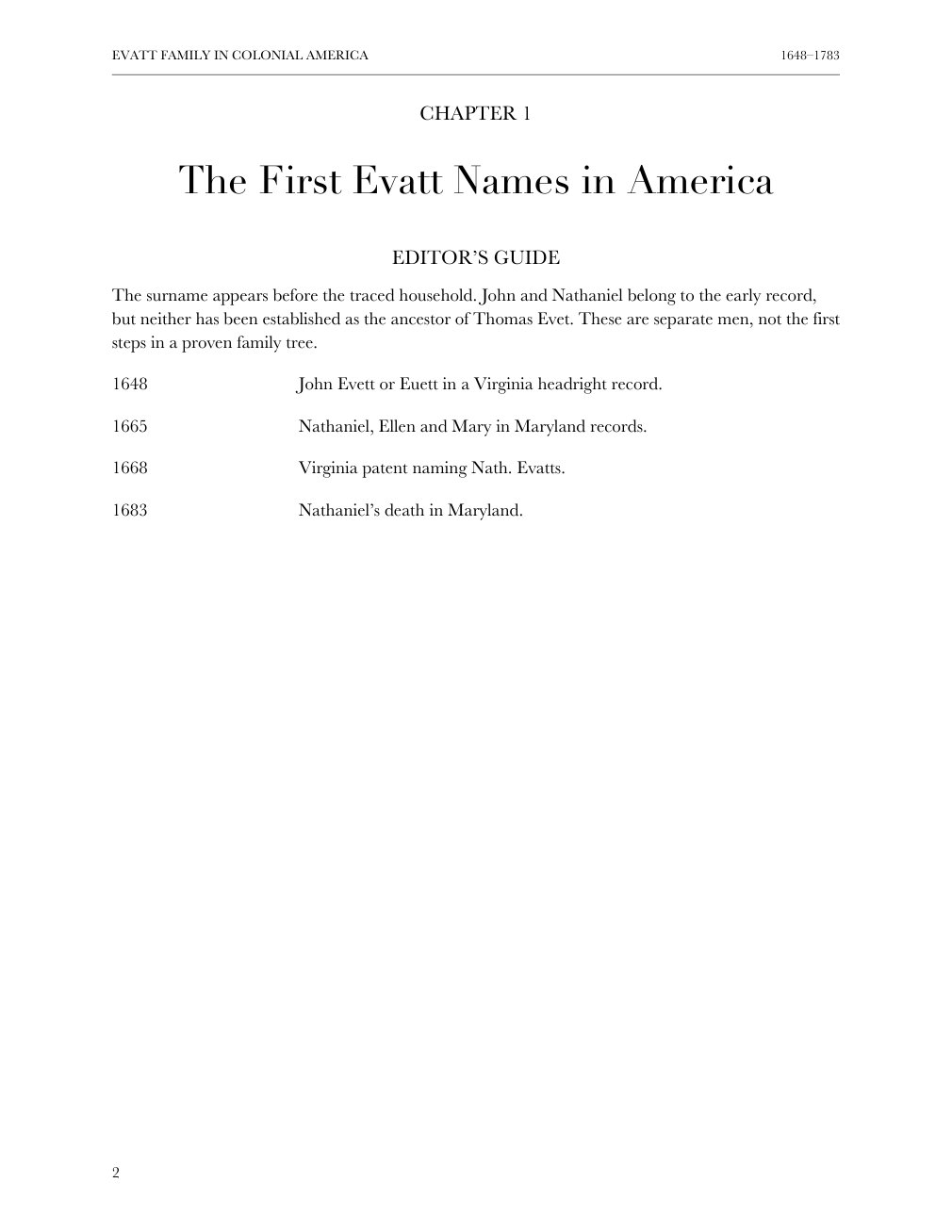
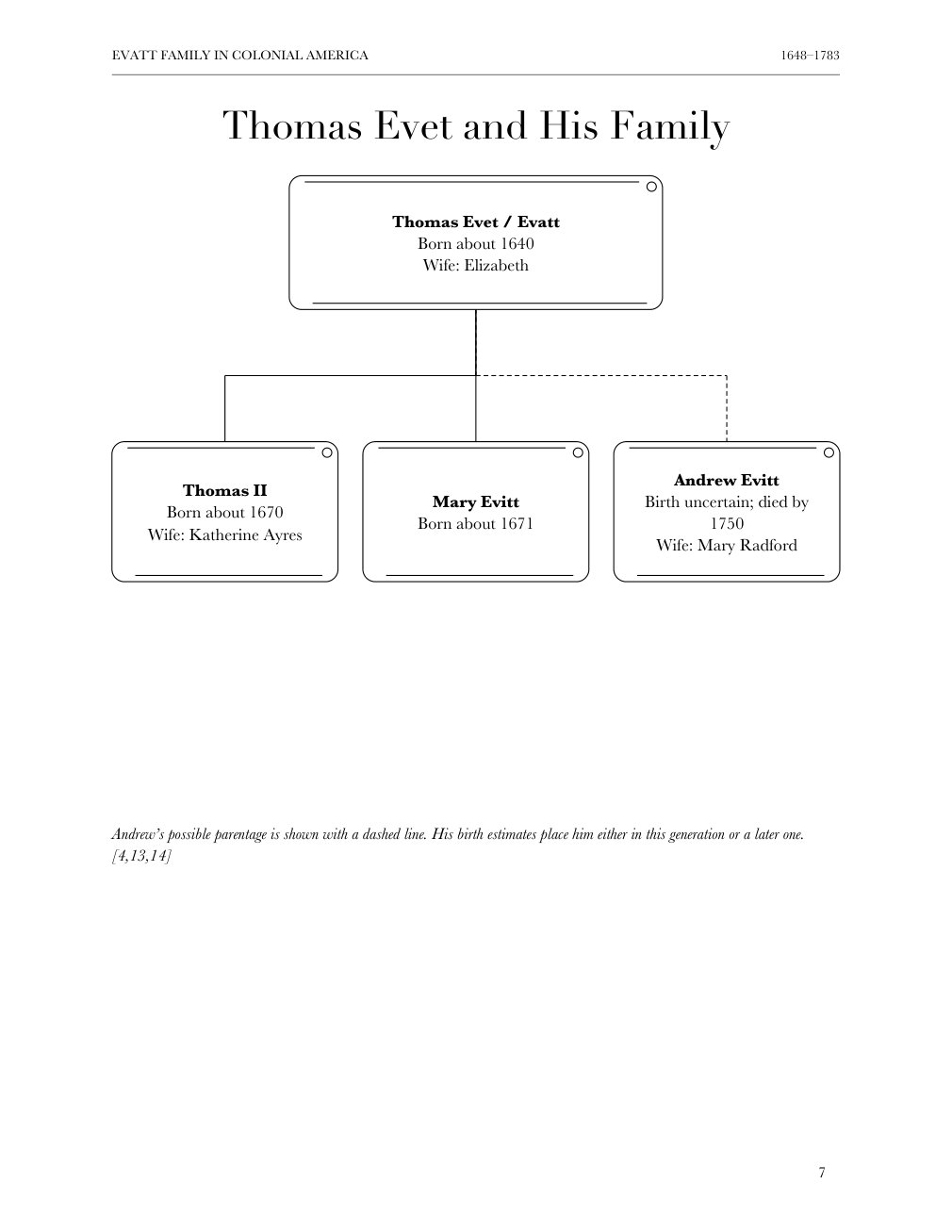
The opening chapter considers early surname records in Virginia and Maryland. The traced family begins with Thomas Evet and Elizabeth in the Virginia colony. The account follows Thomas II and Katherine, their five children, John and Elizabeth, and the three brothers Nehemiah, Thomas and John.
Some documents were made later, including pension testimony recalling Revolutionary service. They are included where they explain an event within the book’s period; they do not extend the narrative into the later generations.
What do the documents show?
A deed can identify a husband and wife, an inherited property or a move to another county. A will can name relatives and explain how property was divided. An estate inventory can show the tools, livestock and household goods a family used.
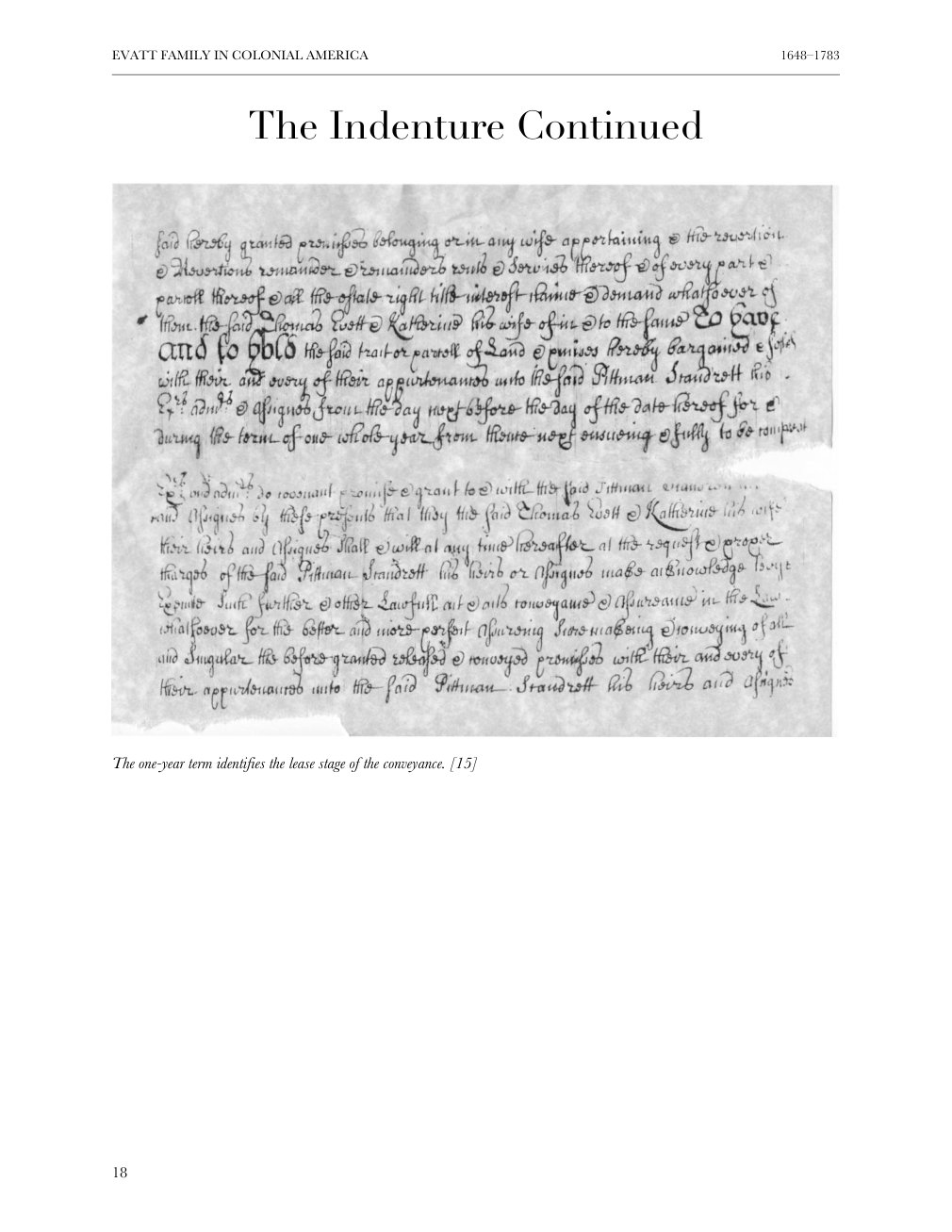
The 1726 indenture concerns land inherited by Katherine Ayres, wife of Thomas Evatt II. Its handwritten pages and transcription appear together in Chapter Three. Thomas’s estate papers lead into explanations of household possessions, inheritance and the responsibilities involved in administering an estate.
Documents are accompanied by explanations of who appears in them, how they relate to the family and why they matter. Source notes identify the records and the family accounts used.
Where does the Revolution enter the story?
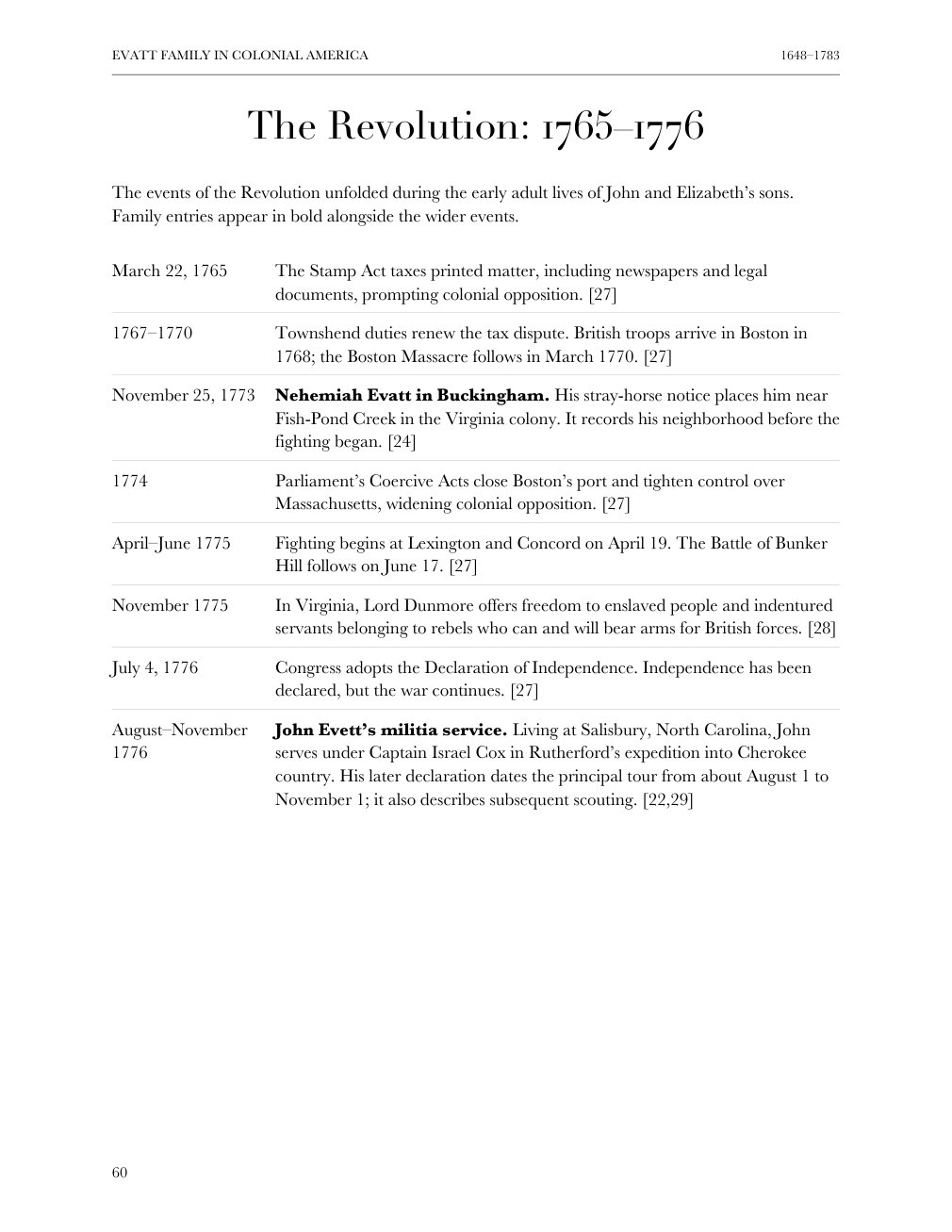
John Evatt’s pension declaration provides an account of his Revolutionary service. The book separates that testimony from historical context and considers militia service alongside the wider conflict.
Chapter Eight follows wartime changes in travel, trade, food supplies and household life. The timeline places the family’s surviving records beside events such as Guilford Courthouse, Point of Fork and Yorktown. A regional map distinguishes family record locations from military events; it does not claim the Evatts were present at every battle.
What was everyday life like?
Chapters on land, roads, river crossings, crops and household work explain the setting behind the names and dates. The history also discusses the Indigenous communities already living on the land and the records of servitude and slavery.
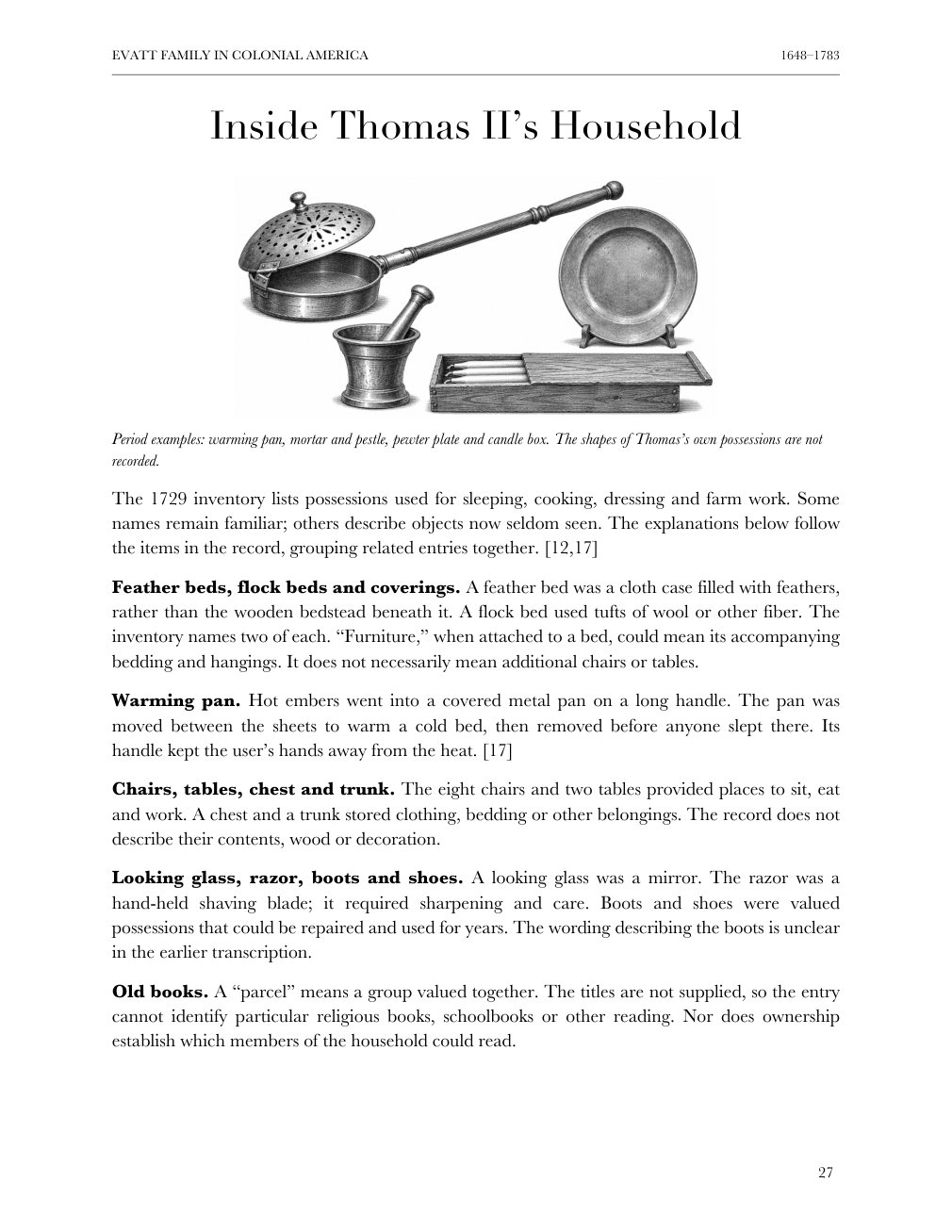
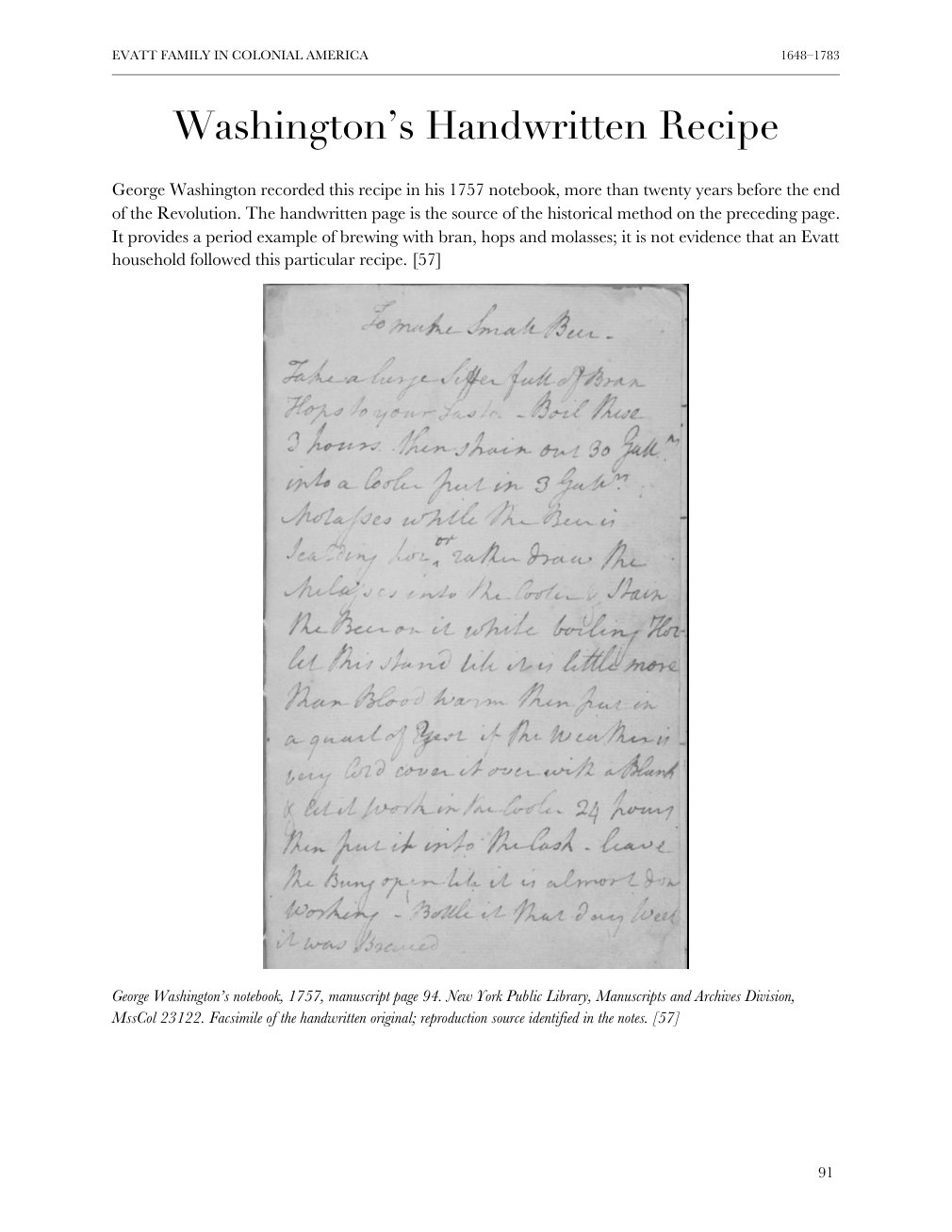
Thomas II’s inventory is followed by explanations of such items as warming pans, pewter, tools, livestock and casks, with illustrations of their general forms. The food chapter includes period traditions and modern adaptations, along with Washington’s handwritten small-beer recipe and a readable transcription. Historical brewing instructions are distinguished from tested modern recipes.
How are the family connections explained?
Family trees use parents, spouses and dates to distinguish people with repeated names. The surrounding accounts explain the documents and identify uncertain placements. Evatt, Evitt, Evet and Evett are retained where they appear in the records.
The overseas parents and passage to America of the early Thomas Evet remain unproved. Other Evatt lines have their own connections; this uncertainty concerns the Thomas followed here. The revised account agrees with the governing family history in The Evatt Clan.
Where does the story continue?
The Evatt Clan follows the later marriages, households, migrations and descendants, alongside other American and overseas Evatt families. The Life & Legacy of John Jenkins Evatt follows one later family in Alabama and Texas.
For a different kind of reading, Empty Fields is a historical novel grounded in the records of Hundley and Elizabeth Evatt. Its fictional narration is distinct from the documentary family history presented here.
Sources and reading notes
Based on the revised 2026 edition of The Evatt Family in Colonial America, 1648–1783, including the family accounts, document transcriptions, inventory explanations, Revolutionary timeline and Sources and Document Notes. The PDF sample and page previews preserve the book’s wording and printed pagination.