
Explore the book’s subject
Hundley Evatt, South Carolina estate records, and the history behind Empty Fields
A reader’s guide from Duo Lepores Press · Updated November 18, 2026
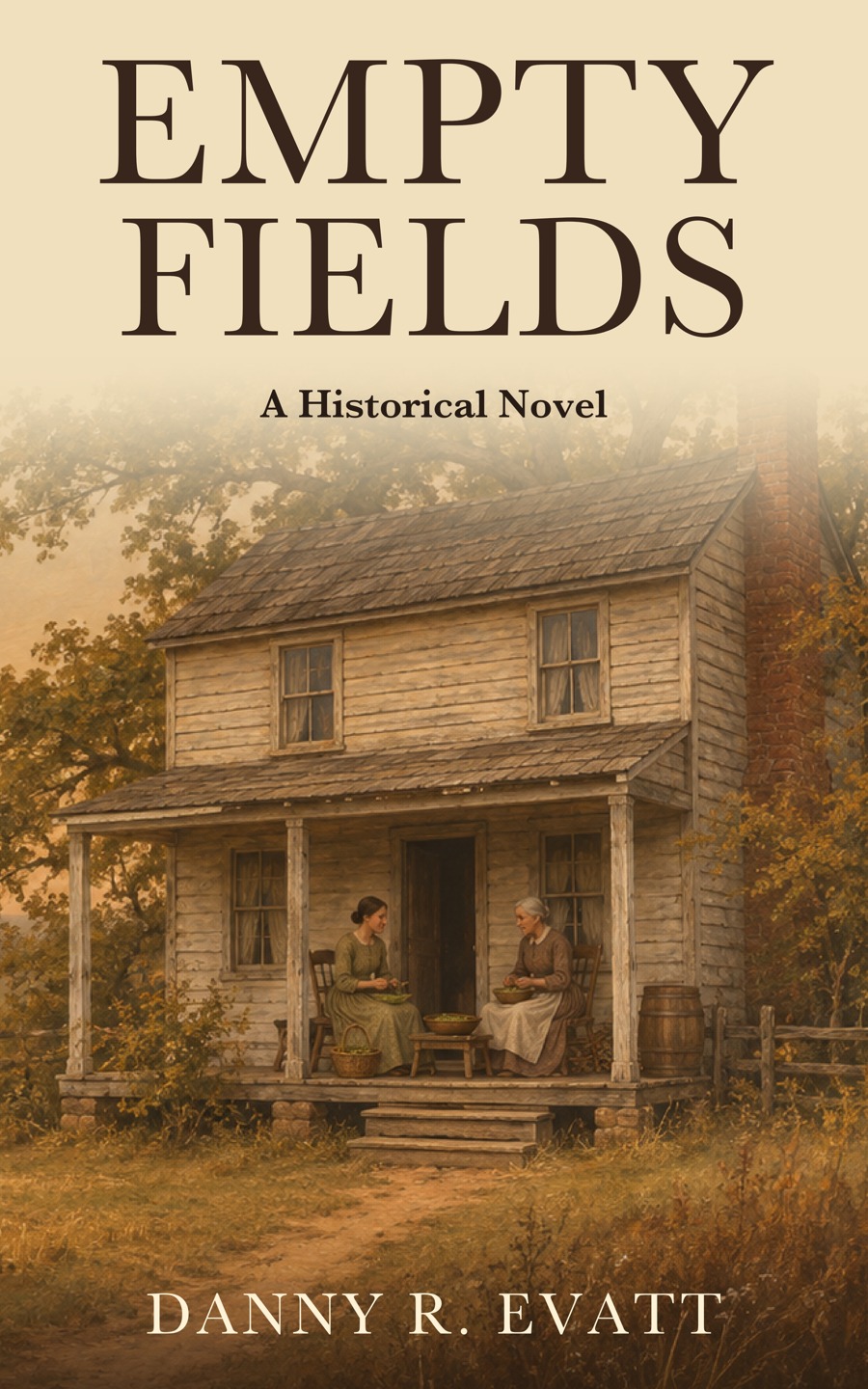
Is Empty Fields a true story or historical fiction?
Empty Fields is historical fiction grounded in the lives of real people and in surviving family records. Danny R. Evatt’s author’s note makes that distinction explicit. Hundley Evatt was his third great-grandfather, and the research behind the novel includes wills, estate inventories, court filings, census information, and other records. The conversations and private scenes belong to the novel’s reconstruction of that world.
Martha Adams and her husband, Arthur, are invented narrative guides. Through Martha’s voice, the story looks back on a South Carolina community before, during, and after the Civil War. Knowing that she is fictional changes how her recollections should be read: they are a way into the story, rather than a newly discovered eyewitness manuscript.
The book reproduces original documents and includes notes so that readers can see the historical foundation alongside the imagined narrative. Both contribute to the reading experience, but they answer different questions.
Who were Hundley and Elizabeth Evatt?
Hundley and Elizabeth Evatt stand at the center of the family story. Their South Carolina farm connects the people who inherited, worked, borrowed, married, and raised children around it. When death and war disturb that household, questions about ownership become questions about how people will live.
The novel follows the family’s relationships through the pressures of inheritance and the Civil War. A farm may appear as a tract of land in a court record, yet its disposition affects a home, a livelihood, and the people whose labor sustained it. The tension between those meanings gives the estate documents their importance to the narrative.
Hundley’s place in the author’s own family also explains the book’s personal origins. The research began with ancestors, but the story extends to the other lives bound to their household, including enslaved people whose experiences cannot be reduced to the language of an inventory.
What can a will or estate inventory tell us?
A will records intentions about the disposal of property, while the later administration of an estate shows what happened as those intentions met debts, claims, deaths, and practical decisions. Reading both kinds of record can reveal a much more complicated history than reading either alone.
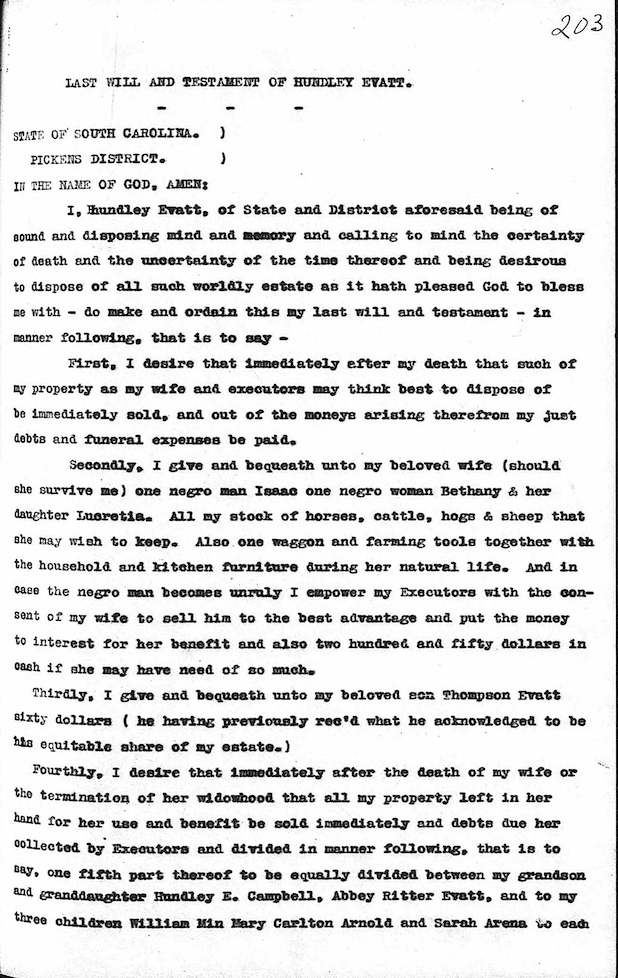
In Empty Fields, Hundley Evatt’s will is one starting point. Estate papers and later proceedings extend the story beyond the document itself. They help identify relationships and transactions, but they were created for legal and financial purposes, so they do not preserve everyone’s voice equally.
That imbalance is especially apparent when enslaved people appear in records as property. A price or an entry in a sale bill is evidence of a system that claimed ownership over a person; it is not a measure of that person’s life. The novel asks the reader to consider the families and fears concealed by that administrative language.
The original scans of the will are presented elsewhere on this page. They allow readers to encounter the document as an object, with its handwriting and arrangement, rather than only through a modern summary.
How does the Civil War enter the story?
The war reaches the household through separation, uncertainty, changes in material circumstances, and the unraveling of the order on which slavery depended. Its consequences are felt in decisions about land and debts as well as in the lives of people sent away to fight.
The novel’s attention stays close to the people caught in those changes. A familiar path, a meal, or a conversation can acquire a different meaning when someone is missing or a household’s future is unsettled. That domestic scale gives readers a way to understand how a national conflict entered places far from its best-known battlefields.
The author’s note describes the work as an effort to remember hardship and suffering without allowing them to disappear behind family pride. The book’s treatment of enslaved people is part of that purpose. Their forced dependence on the estate belongs at the center of the history, even when surviving records provide only fragments of their experience.
Did the surviving records settle every question?
No. The book’s afterword discusses a further estate-related complaint filed in 1867, after the war, and explains that the eventual outcome has not been established from the documentation located for the book. That limit matters. The resolution of a novel’s emotional story does not necessarily resolve every historical dispute behind it.
For readers tracing their own ancestors, this is a useful example of what family research can uncover and what it may leave unfinished. A document can confirm that a dispute existed without showing how it ended. Several records may illuminate one episode while leaving another person almost invisible.
Readers drawn to South Carolina history, Civil War fiction, family inheritance, and stories about the human consequences of slavery can begin with the free “Carolina Night Rain” sample. For a broader documentary account of the family’s earlier generations, The Evatt Family in Colonial America provides a companion perspective.
Sources and reading notes
Based on the author’s note, narrative, reproduced estate documents, and afterword in Danny R. Evatt’s Empty Fields. This guide identifies the book as historical fiction; reconstructed scenes and the invented narrators are not presented as primary-source testimony.