
Explore the book’s subject
John Jenkins and Martha Evatt: an Alabama childhood, a Texas farm, and a family remembered
A reader’s guide from Duo Lepores Press · Updated November 18, 2026
Who were John Jenkins and Martha Evatt?
John Jenkins Evatt lived from 1857 to 1926. Born in Alabama, he later made a home in Texas with his wife, Martha Ellen Stout. The Life & Legacy of John Jenkins Evatt follows that journey through family recollections, historical records, photographs, and the histories of their children and relatives.
The book is both a biography of a household and a family reference. Its earlier chapters establish the generations before John, while later sections gather stories and selected descendant lines. This arrangement allows a reader to place the couple within the family without losing sight of the work and relationships that made their own lives distinctive.
Martha’s place in the account is central. Household skills, possessions, and memories of the home preserve aspects of her life that might be difficult to recover from a census entry alone. The couple’s story takes shape through both the official record and what relatives remembered.
What does the book tell us about John’s childhood?
John lost his mother shortly after his birth and his father when he was twelve. The family account describes him being bonded out to work until he reached twenty-one. That experience forms an important part of the book’s treatment of his early years and the circumstances in which he entered adulthood.
The authors preserve recollections about those events rather than reducing them to a few dates. Family memories can retain a detail or an impression that never entered an official record, although they also reflect the perspective and later understanding of the person recalling them. The book’s value lies partly in having gathered those voices while relatives were still able to contribute.
His later marriage and move west emerge from that earlier life. The account gives readers a sense of the distance between an orphaned boy in Alabama and the man who would establish a household near May, Texas.
What was life like at the farm near May, Texas?
The farm and home near May provide some of the most vivid material in the book. Relatives recalled rooms, furnishings, food, and the routines of visiting. Martha’s loom, woven carpets, a table prepared for a large family, and spearmint beneath the windmill turn the house into somewhere a reader can picture.
Such details have historical value because they describe how a household worked. A loom points to the making of things that might later be bought ready-made, while a windmill belongs to the practical arrangements that sustained the home. Memories of hospitality show how that work was experienced by children and grandchildren.
The book also places the family alongside the wider community through local historical material. That context helps explain the world surrounding the farm without making the couple stand for every settler’s experience. Their lives were particular, even where their labor and difficulties would have been familiar to neighbors.
Why does the Brownwood family photograph matter?
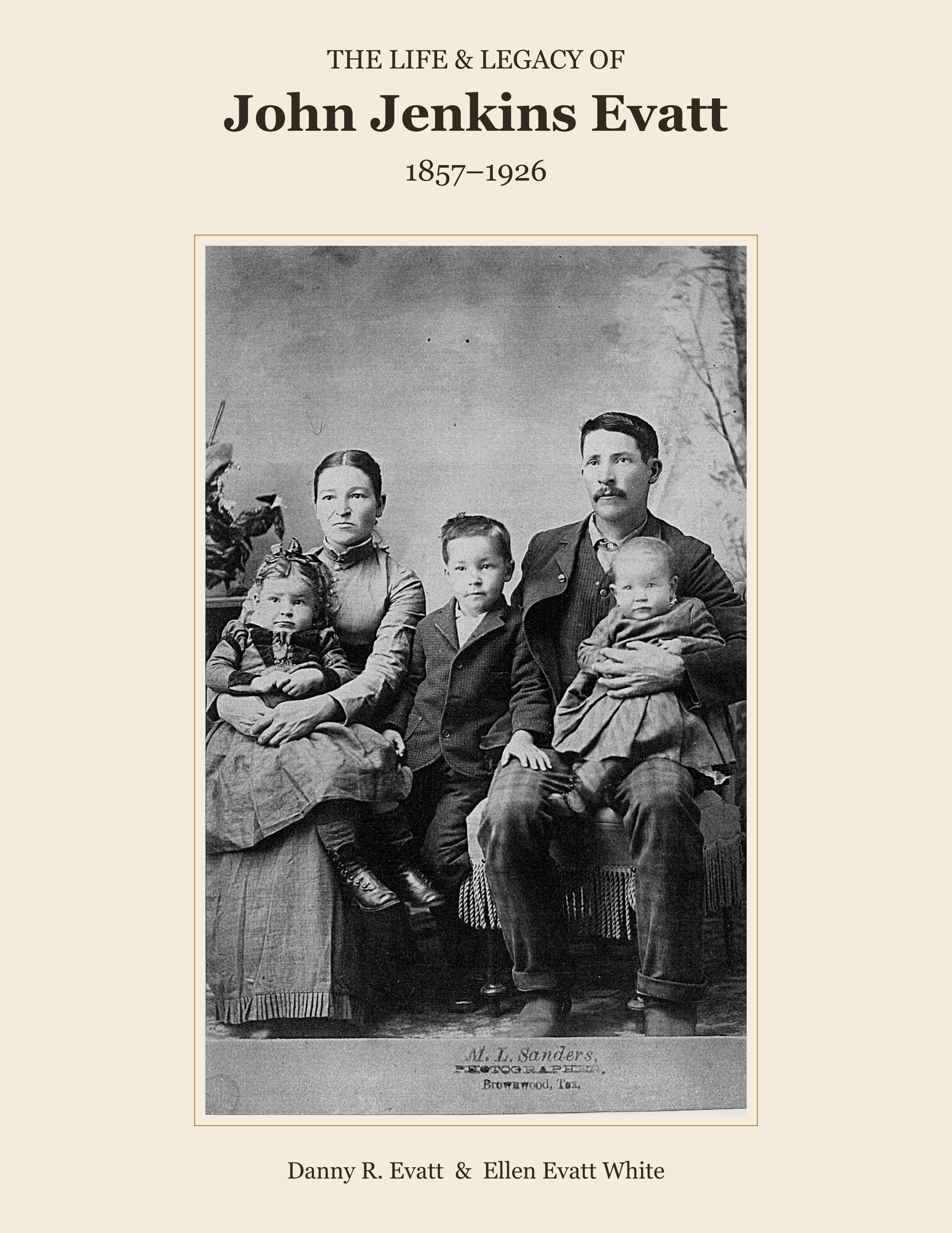
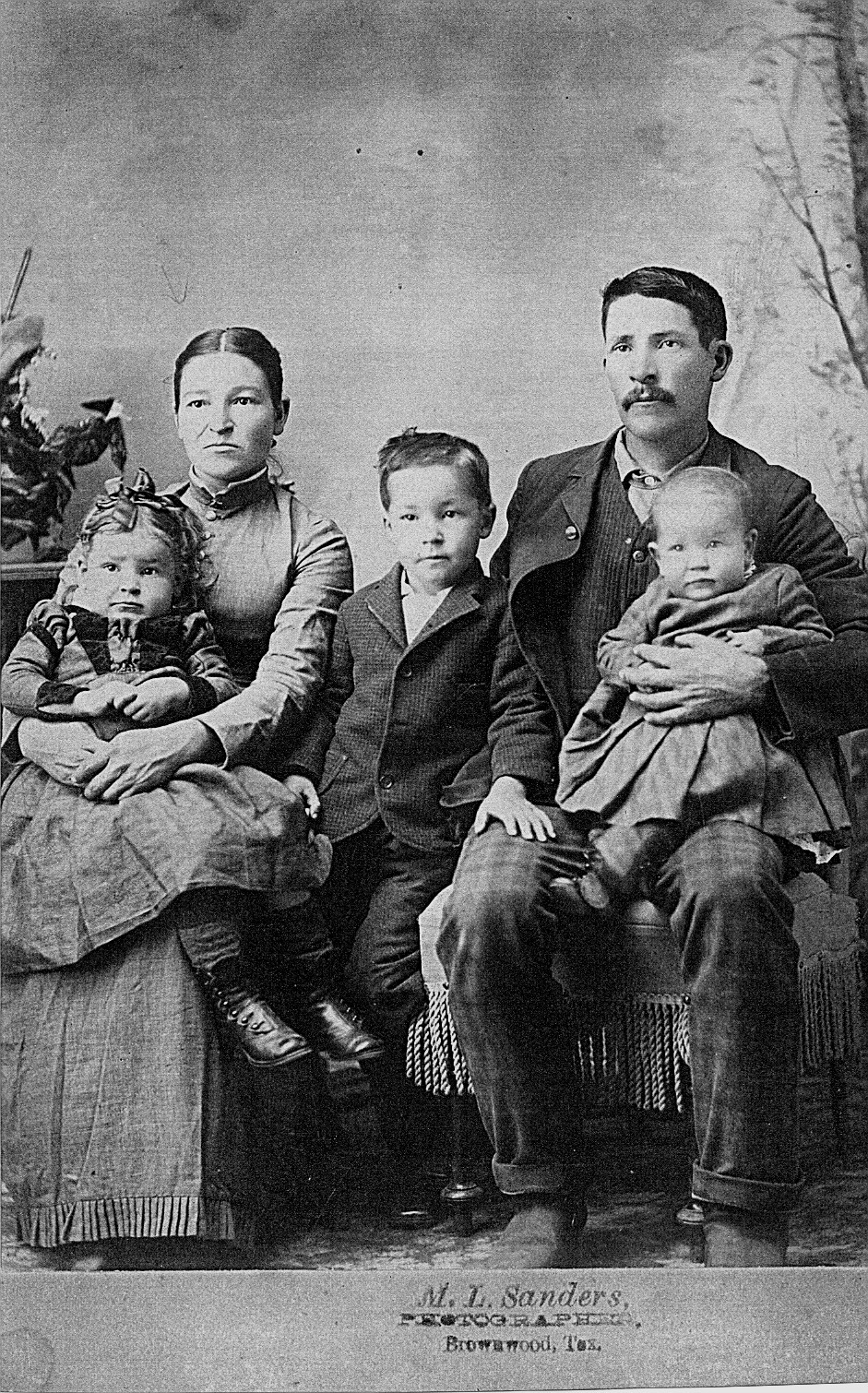
The family portrait reproduced on this page shows John and Martha with Nim, Lydia, and Mary around 1888. The book recounts a covered-wagon trip to Brownwood to have the photograph taken, with the journey and return occupying three days.
Knowing that story changes the image. A formal portrait becomes evidence of time set aside, travel arranged, and a family’s wish to preserve its appearance together. What now takes a moment on a phone required a considerable interruption to ordinary work.
Photographs can also help a family history hold its readers’ attention across generations. A name in a tree identifies a relationship; a face invites a different kind of curiosity. Neither replaces the other, and the book uses both.
How did Danny Evatt and Ellen Evatt White create the book?
The book grew from a collaboration between Danny R. Evatt and his second cousin, Ellen Evatt White. Ellen had spent years pursuing records, visiting libraries, corresponding with relatives, and collecting information. Their contact brought that work together with Danny’s desire to understand and preserve the family’s history.
First published in 2001, the book became the beginning of Danny’s wider writing work. The account of their partnership remains part of this page because it explains something about the book that a contents list cannot: the effort belonged to people who cared about the family and wanted its stories to survive.
Ellen has since passed away. Her contribution is preserved in the book’s authorship and in the research and memories it brought together. The result remains a shared work, rather than simply a source that later books have replaced.
How can readers use the book today?
A reader can begin with John and Martha’s biography, follow a particular child’s branch, or turn first to the photographs and family memories. The free PDF sample includes the original foreword and a family photograph, giving a sense of both the purpose and the personal character of the work.
The family trees should be read as the book describes them: a record assembled from the information available to its authors, with possible omissions and errors, rather than a continuously updated directory of descendants. The current foreword notes that the trees have not been fully updated. For many readers, their greatest value is as a starting point for understanding a family relationship or locating the story that accompanies it.
For the family’s broader background, The Evatt Clan explores American and overseas surname histories, while The Evatt Family in Colonial America concentrates on the earlier American setting. This book brings that wider history home to one couple, their children, and the people who remembered them.
Sources and reading notes
Based on Danny R. Evatt and Ellen Evatt White’s The Life & Legacy of John Jenkins Evatt, including the foreword, chapters on John’s early years and marriage, the farm and home, and the family-photograph account. Family recollections are identified as recollections; the descendant trees are not described as a current complete register.